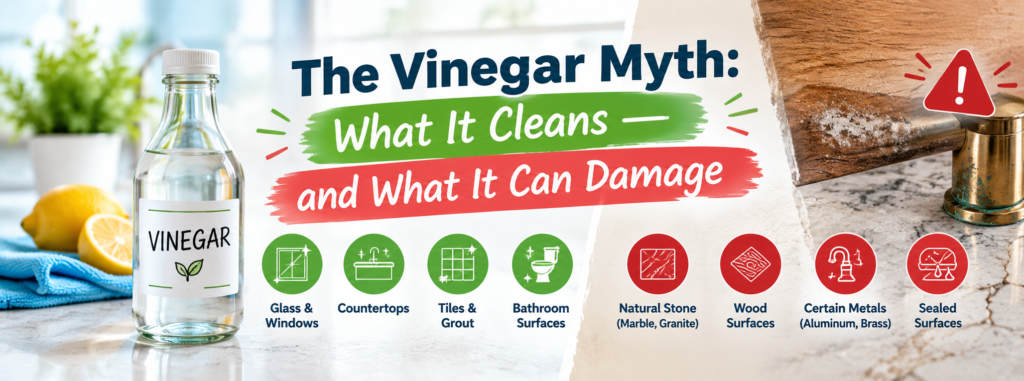
Vinegar has become one of the most popular DIY cleaning ingredients, especially for homeowners looking for simple alternatives to commercial products. But if you live in Plano and regularly handle your own cleaning, it is important to know that vinegar is not a universal cleaner. While it can be useful for certain jobs, it can also damage some surfaces when used incorrectly. Understanding where vinegar works — and where it does not — can help you avoid unnecessary repairs and keep your home looking its best. Whether you handle your own cleaning or hire house cleaning Plano TX professionals, knowing the basics can make a difference.
Vinegar is inexpensive, easy to find, and effective against certain types of buildup. Its acidity makes it particularly useful for dissolving mineral deposits and some soap residue. However, that same acidity is exactly why vinegar can be harmful to certain materials.
The idea that “natural” automatically means “safe for everything” is one of the biggest cleaning myths. A product can be natural and still damage a surface.
For Plano homeowners, the key is not necessarily to stop using vinegar altogether. Instead, it is to understand when it makes sense, when it should be diluted, and when another cleaning product is the better choice.
Why Vinegar Works as a Cleaner
White distilled vinegar contains acetic acid, which gives it its characteristic sour smell and acidic properties. That acidity can help break down certain mineral deposits, soap residue, and other buildup.
This makes vinegar useful for specific cleaning tasks around the house.
For example, diluted white vinegar can be helpful for:
- Removing hard-water residue from some compatible surfaces
- Dissolving mineral deposits around certain fixtures
- Reducing soap buildup
- Freshening some washable surfaces
- Cleaning certain household appliances when the manufacturer’s instructions allow it
Vinegar is especially useful when the problem you are trying to remove is alkaline, such as some mineral deposits.
However, vinegar is not a disinfectant that should automatically replace an EPA-registered disinfectant. It also does not work equally well on every type of dirt, stain, or surface.
That distinction matters.
A cleaner’s effectiveness depends not only on the product but also on what you are cleaning, what caused the buildup, and what the surface is made of.
The Biggest Vinegar Myth: “It Cleans Everything”
One of the most common DIY cleaning beliefs is that a spray bottle filled with vinegar and water can be used throughout the entire house.
That sounds convenient, but it can create problems.
Different surfaces have different chemical properties. Some tolerate mild acids, while others can be etched, dulled, stained, or otherwise damaged by repeated exposure.
This is why professional Plano cleaning services typically approach surfaces individually rather than treating every material with the same product.
Before using vinegar, ask two simple questions:
- What am I trying to remove?
- What material am I cleaning?
If you cannot answer both questions, it is better to check the manufacturer’s care instructions before spraying.
Where Vinegar Can Be Helpful
Removing Hard-Water Buildup
One of vinegar’s more useful applications is dealing with certain mineral deposits caused by hard water.
You may notice white or cloudy buildup around faucets, shower fixtures, or other areas where water frequently evaporates.
Because vinegar is acidic, it can help dissolve some of these mineral deposits.
However, the surface still matters.
A solution that works well on one fixture may be inappropriate for another. Always verify that the material can safely come into contact with vinegar.
Tackling Some Soap Residue
Soap scum can contain alkaline components that respond to acidic cleaners.
For compatible surfaces, diluted vinegar may help loosen some of this residue. It can be particularly useful as part of a regular maintenance routine before buildup becomes heavy.
But vinegar is not a magic solution for every bathroom mess. Thick buildup may require a product specifically formulated for the surface and type of residue.
Freshening Certain Household Areas
Vinegar’s odor can be strong while you are cleaning, but it dissipates as it dries.
When appropriately diluted and used on compatible surfaces, vinegar can be a useful option for some household cleaning tasks.
The important part is matching the product to the surface rather than relying on a single DIY recipe for the entire home.
What Vinegar Can Damage
This is where the vinegar myth becomes especially important.
Because vinegar is acidic, it can damage materials that are sensitive to acids. Some damage may happen immediately, while other problems develop gradually through repeated use.
Natural Stone
One of the biggest warnings involves natural stone surfaces.
Materials such as marble, limestone, travertine, and some other natural stones can be sensitive to acids.
Using vinegar on these surfaces can cause etching, which may appear as dull or discolored areas. Once the surface has been etched, simply wiping it again with another cleaner will not necessarily restore its original appearance.
This is particularly important for:
- Stone countertops
- Bathroom vanities
- Shower surfaces
- Stone floors
- Decorative stone features
If you have invested in natural stone, use a cleaner specifically recommended for that material.
Certain Grout and Stone Finishes
Vinegar may also be problematic for some grout and stone installations.
While people often recommend vinegar for bathroom cleaning, acidic products can affect certain grout types and surrounding materials.
Instead of assuming a popular DIY recipe is safe, check the installation or manufacturer’s care recommendations.
A professional cleaning company Plano TX homeowners trust should also pay attention to the specific materials in a home rather than using one cleaner everywhere.
Wood Surfaces
Wood requires another level of caution.
Finished wood surfaces can vary considerably depending on the type of finish and how they were sealed.
Repeated exposure to acidic cleaning solutions may affect some finishes, especially if the product is too concentrated or left sitting on the surface.
For hardwood floors, cabinets, furniture, and other wood surfaces, use products recommended for the specific finish.
And remember: more moisture does not mean cleaner wood.
Excess moisture can create its own problems.
Electronics
Vinegar should not be treated as an all-purpose electronics cleaner.
Televisions, computer monitors, phones, keyboards, remote controls, and other electronics have specialized surfaces and components.
Liquid can enter openings and cause damage, while inappropriate cleaners can affect protective coatings.
For electronics, follow the manufacturer’s cleaning instructions and use products specifically designed for the device when necessary.
Vinegar Is Not a Universal Disinfectant
Another common misconception is that because vinegar can help remove some grime, it must also disinfect surfaces effectively.
Those are two different things.
Cleaning removes dirt, debris, and some buildup from a surface. Disinfecting is a separate process designed to kill certain microorganisms when a product is used according to its label.
If you are cleaning a surface where disinfection is important, use an appropriate disinfectant and follow its directions.
This is particularly relevant in kitchens, bathrooms, and high-touch areas.
A good residential cleaning Plano routine should distinguish between routine cleaning and situations where targeted disinfection is actually needed.
Never Mix Vinegar With Certain Cleaning Products
Vinegar may seem harmless because it is a common kitchen ingredient, but it should never be treated casually when mixing cleaning chemicals.
Most importantly, never mix vinegar with bleach.
Combining acids such as vinegar with bleach can produce chlorine gas, which can be extremely dangerous to breathe.
The safest approach is simple:
Do not mix cleaning products unless the manufacturer specifically states that they can be combined.
You also do not need a complicated collection of homemade mixtures to keep a house clean.
In many situations, using one appropriate product at a time is both safer and more effective.
Vinegar and Your Kitchen
The kitchen is one area where homeowners frequently reach for vinegar.
It can have a place in a cleaning routine, but it should not be used indiscriminately.
Countertops
Countertops should always be cleaned according to their material.
Quartz, granite, marble, laminate, butcher block, and other countertop materials have different care requirements.
Natural stone deserves particular caution because acids can cause surface damage.
Appliances
Some appliance manufacturers allow diluted vinegar for specific maintenance tasks, while others recommend different products.
Before using vinegar inside a coffee maker, dishwasher, washing machine, or other appliance, check the manufacturer’s instructions.
A viral cleaning hack is not a substitute for an appliance manual.
Stainless Steel
Stainless steel is another area where technique matters.
Even when a cleaner is compatible with stainless steel, scrubbing against the grain or leaving a solution sitting on the surface can result in streaks or an uneven appearance.
Always follow the manufacturer’s recommendations for your particular appliance or fixture.
What About Bathrooms?
Vinegar can be useful in some bathroom cleaning situations, especially when mineral buildup is the problem.
But bathrooms contain a mixture of materials, which means one product may not be appropriate everywhere.
A typical bathroom might contain:
- Ceramic tile
- Porcelain
- Natural stone
- Glass
- Metal fixtures
- Acrylic
- Grout
- Painted surfaces
Each material can respond differently to cleaning products.
Instead of spraying vinegar across the entire bathroom, identify the surface first.
For example, a glass shower door may have a completely different cleaning requirement than a marble shower surround.
This is one reason experienced maid service Plano TX professionals use different techniques and products depending on the area they are cleaning.
The Problem With DIY Cleaning Recipes
DIY cleaning recipes can be helpful, but social media has made it easy for cleaning advice to spread without important context.
A short video might demonstrate vinegar being used successfully on one particular surface. That does not necessarily mean the same method is safe for every home.
The missing information is often the most important part:
- What material was being cleaned?
- What was the surface’s finish?
- How concentrated was the solution?
- How long did it sit?
- Was the surface rinsed afterward?
- Was the method approved by the manufacturer?
A cleaning tip should never be judged solely by whether it looks effective in a 30-second video.
The goal is not simply to make a surface look clean today. It is to keep the surface in good condition over time.
A Better Way to Choose Your Cleaning Product
Instead of asking, “What can I clean with vinegar?” try asking, “What cleaner is appropriate for this surface and this type of buildup?”
That small change can prevent many cleaning mistakes.
Step 1: Identify the Surface
Determine whether you are cleaning:
- Natural stone
- Wood
- Glass
- Ceramic
- Porcelain
- Stainless steel
- Plastic
- Painted surfaces
- Fabric
- Electronics
Step 2: Identify the Problem
Are you dealing with:
- Dust?
- Grease?
- Soap scum?
- Hard-water deposits?
- Food residue?
- Pet messes?
- Stains?
- Germs?
- Odors?
Different problems require different approaches.
Step 3: Check the Care Instructions
When in doubt, check the manufacturer’s recommendations.
This is particularly important for expensive countertops, flooring, appliances, furniture, and specialty finishes.
Step 4: Test an Unnoticeable Area
If a product is approved for the material but you are still uncertain, test it in a small, inconspicuous area first.
This can help you catch discoloration or surface reactions before they become obvious.
When Professional Cleaning Makes More Sense
There is nothing wrong with handling everyday cleaning yourself. Regular maintenance can keep a home looking great between professional visits.
But certain cleaning situations can be more complicated than they initially appear.
For example, a home may contain several different flooring materials, specialty countertops, delicate finishes, and heavily used areas.
A professional cleaner has to think beyond simply removing dirt.
The goal is to clean effectively while protecting the materials being cleaned.
This is especially useful for deep cleaning projects, move-in or move-out cleaning, and homes that have accumulated significant buildup.
For homeowners looking for deep cleaning Plano TX, professional help can also make it easier to address areas that are often overlooked during routine cleaning.
Vinegar vs. Professional Cleaning Products
Vinegar is inexpensive and convenient, but that does not mean it is always the most effective option.
Commercial cleaning products are often formulated for specific tasks and materials. Some are designed to remove grease, while others target mineral deposits, soap scum, stains, or disinfecting needs.
The right product can reduce the amount of scrubbing required and help prevent damage caused by using an inappropriate cleaner.
That is one reason professional cleaning teams often carry multiple products rather than relying on one “everything cleaner.”
Good cleaning is less about having the strongest product and more about choosing the right product for the job.
Don’t Let a Cleaning Hack Become a Repair Bill
The biggest lesson behind the vinegar myth is simple:
Natural does not automatically mean harmless.
Vinegar can absolutely be useful. It can help with certain mineral deposits and other compatible cleaning tasks. But it is not suitable for every material, every stain, or every cleaning situation.
Using vinegar on acid-sensitive surfaces can leave behind damage that is much more expensive to fix than the cleaning job itself.
When you’re unsure, take a few extra minutes to identify the surface and check its care instructions.
That small step can protect your countertops, floors, fixtures, appliances, and furniture.
Keep Your Plano Home Clean — and Your Surfaces Protected
A clean home should not come at the expense of the materials inside it. Whether you’re tackling everyday messes yourself or scheduling professional house cleaning Plano TX, knowing which products belong on which surfaces is an important part of maintaining your home.
Vinegar has earned its reputation as a useful household cleaner, but it should not be treated as a universal solution. Use it where it is appropriate, avoid it on acid-sensitive materials, never mix it with bleach, and always follow manufacturer recommendations when caring for specialty surfaces.
At Walo Maids, we believe effective cleaning is about more than making a home look clean for the moment. It is about using the right approach for the right surface and helping homeowners maintain a comfortable, well-cared-for space. Whether you need regular Plano cleaning services, deep cleaning Plano TX, move-in or move-out cleaning, or help keeping your home consistently maintained, choosing the right cleaning method matters.
The next time someone tells you, “Just use vinegar,” pause for a second.
Ask what you’re cleaning first.
Your surfaces will thank you.
COntact us at 214–390–3387 or visit https://walomaids.com/plano-tx-house-cleaning-and-maid-service/ to book your service.