
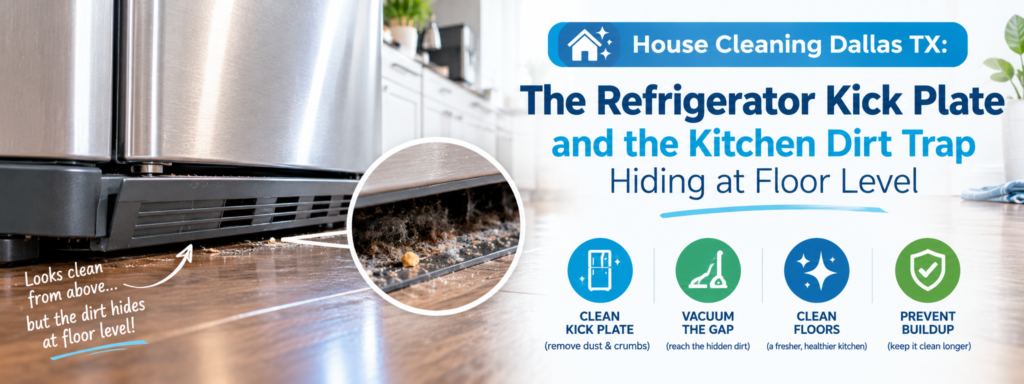
The kitchen can look spotless from countertop to cabinet, yet dust, crumbs, and pet hair may still be collecting in one of the most overlooked places in the room: the bottom of the refrigerator. For homeowners looking for House Cleaning Dallas TX, the refrigerator kick plate is a small but important area that deserves attention during a regular cleaning routine. The lower grille, the floor beneath the refrigerator, and the surrounding edges can trap debris that ordinary sweeping and wiping often miss.
Even when the rest of the kitchen looks clean, a dusty refrigerator base can make the entire area feel neglected. Pet hair can gather around the grille, crumbs can settle along the edges, and sticky residue may develop on the nearby floor. Over time, this buildup can become more difficult to remove, especially when the refrigerator is surrounded by cabinets or positioned in a high-traffic area.
Understanding how to clean this area safely can help homeowners maintain a fresher kitchen without disturbing the appliance’s ventilation system. With the right approach, a few minutes of targeted cleaning can make a noticeable difference.
For busy households, professional Dallas cleaning services can also help address these overlooked spaces as part of a more comprehensive home cleaning routine.
What Is a Refrigerator Kick Plate?
The refrigerator kick plate is the panel located near the bottom front of many refrigerators. Depending on the appliance model, this panel may cover a grille, an air intake, a condenser area, or other components used to support the refrigerator’s operation.
Some refrigerators have a removable lower grille, while others use a fixed panel or a different ventilation design. Because construction varies, it is important to identify the specific type of appliance before attempting to remove or clean any part.
Although the kick plate is easy to overlook, its location makes it especially vulnerable to everyday dirt.
Why Does This Area Collect So Much Dirt?
Several factors contribute to the buildup around the refrigerator base:
- Floor-level airflow: Air movement near the floor can carry dust, lint, and fine debris toward the lower refrigerator area.
- Pet hair: Dogs and cats naturally shed hair that can accumulate around the grille and nearby floor.
- Kitchen traffic: Crumbs, food particles, and dirt from shoes may travel across the kitchen floor and settle along the refrigerator’s edges.
- Hidden corners: Narrow gaps between the appliance and surrounding cabinets can make routine cleaning difficult.
- Moisture and residue: Spills, splashes, and damp cleaning tools can leave residue near the refrigerator base.
Because this area sits low to the ground, people may not notice the buildup until they crouch down or move their attention away from countertops and other visible surfaces.
A consistent maid service Dallas TX routine can help prevent these small areas from becoming forgotten cleaning tasks.
The Hidden Problems Behind a Dusty Refrigerator Base
A dirty kick plate is not necessarily a sign that an entire kitchen is unclean. It often reflects how easily low, narrow, and partially concealed surfaces escape everyday maintenance.
However, leaving the area unattended can create several avoidable problems.
1. Dust and Pet Hair Can Accumulate Around the Grille
Pet hair is especially noticeable around refrigerator bases because it tends to collect along edges, corners, and areas where airflow or room movement pushes lightweight debris.
When mixed with ordinary dust, the hair may form compact clumps that cling to the grille or gather beneath the front edge of the appliance.
Dry pet hair and dust are generally easier to remove with a suitable vacuum attachment or soft brush than after they become damp and stick to the floor.
2. Crumbs Can Settle Into Narrow Gaps
Kitchens experience constant activity. Food preparation, unpacking groceries, and moving between the refrigerator and countertops can send small particles toward the floor.
These crumbs may settle against the kick plate, between the refrigerator and cabinets, or along the edge where the floor meets the appliance.
A quick pass with a mop may clean the open floor while leaving these narrow areas untouched. That is why detailed cleaning should include the edges and corners around large appliances.
3. Greasy Residue Can Make Dust Stick
Cooking oils and airborne grease can travel beyond the stovetop and settle on nearby surfaces. When residue reaches the lower refrigerator panel, dust may cling more stubbornly than it would to a clean, dry surface.
The result can be a dull or grimy appearance that does not disappear with a quick wipe.
Using an appropriate cleaner for the panel’s material can help remove residue without damaging its finish. Always follow the refrigerator manufacturer’s instructions and the cleaning product’s label.
4. Overlooked Dirt Can Make the Kitchen Feel Incomplete
People naturally focus on visible surfaces such as countertops, sinks, cabinet fronts, and floors. Yet the small spaces around appliances contribute to the overall appearance of the room.
A clean floor with a dusty refrigerator grille can create a noticeable contrast. Paying attention to these finishing details helps a kitchen feel more thoroughly maintained.
For homeowners comparing house cleaning Dallas Texas options, it is worth asking whether the cleaning checklist includes appliance exteriors, floor edges, and other accessible areas that are easy to miss during a quick tidy-up.
How to Clean the Refrigerator Kick Plate Safely
Cleaning this area does not need to involve complicated equipment or moving a heavy appliance. The safest method is to focus on accessible exterior surfaces and follow the instructions provided for the specific refrigerator.
Before starting, check the owner’s manual. It may explain how the grille is designed, which surfaces can be cleaned, whether a vacuum is appropriate, and whether any removable parts require special handling.
Step 1: Clear the Area
Move nearby items, such as pet bowls, small storage containers, and floor mats, so you can reach the accessible surfaces.
Pick up loose debris before using a vacuum or cloth. This helps prevent crumbs and hair from being pushed farther into narrow gaps.
If you are cleaning around an older appliance or one with unusual ventilation openings, consult the manual before proceeding.
Step 2: Remove Loose Dust and Pet Hair
Use a vacuum with a suitable soft-brush attachment to collect loose dust and pet hair from the accessible exterior grille and surrounding floor, provided the manufacturer permits this method.
Keep the attachment gentle and avoid pressing hard against the grille. Do not force the vacuum nozzle into openings or attempt to reach internal components.
A soft, dry microfiber cloth or brush may be appropriate for surfaces that cannot be vacuumed safely.
The goal is to remove loose debris without bending grille slats, damaging finishes, or interfering with the appliance.
Step 3: Wipe the Exterior Panel
If the kick plate has fingerprints, smudges, or light residue, use a soft cloth slightly dampened with a manufacturer-approved cleaning solution.
Wipe the accessible exterior surface gently, then dry it with a clean cloth if the instructions recommend drying.
Avoid spraying cleaner directly into the grille or onto electrical openings. Never pour water over the panel, and do not allow liquid to collect near the appliance’s base.
For stainless steel, painted metal, or plastic panels, choose a cleaner suitable for that material. Abrasive pads and harsh chemicals can scratch, discolor, or damage certain finishes.
Step 4: Clean the Surrounding Floor
Once the panel is addressed, clean the floor immediately in front of and beside the refrigerator.
Use a vacuum or dry dust mop to collect loose particles before wet cleaning. This prevents dirt from turning into muddy residue when water or cleaning solution is introduced.
For hard floors, use a compatible floor cleaner and avoid excess moisture around the appliance. Follow the flooring manufacturer’s recommendations, particularly for hardwood and laminate.
If the refrigerator sits on a delicate floor, be careful not to push cleaning tools underneath it in a way that scratches the surface.
Step 5: Inspect the Finished Area
Take a moment to check the corners, floor edges, and accessible grille surface.
Look for remaining pet hair, crumbs, visible smudges, or streaks. If the manufacturer’s instructions permit, repeat the gentle cleaning process where necessary.
A final inspection helps ensure that debris has been removed rather than simply moved from one part of the kitchen to another.
Why Refrigerator Ventilation Areas Must Stay Clear
The refrigerator kick plate is not always just a decorative panel. Depending on the design, the lower grille may form part of the appliance’s ventilation system.
Some refrigerators draw air through a lower front grille, while others use different intake and exhaust arrangements. Keeping the designated ventilation areas unobstructed helps the appliance operate as intended.
Avoid Blocking Airflow
Do not push rugs, storage baskets, pet beds, cleaning cloths, or other objects against ventilation openings when the manufacturer requires them to remain clear.
Avoid covering the grille with decorative materials or placing items directly in front of an air intake.
If the refrigerator appears to have inadequate clearance, consult its installation instructions instead of assuming that every model needs the same amount of space.
Do Not Remove Panels Without Instructions
Some kick plates can be removed for cleaning, but others may require tools or specific handling procedures. Removing the wrong panel can expose components that should not be disturbed.
Never pull on a grille simply because it looks removable. Check the manual first, and do not attempt to clean electrical or mechanical components unless the manufacturer explicitly provides instructions for that task.
If the manual calls for disconnecting power before a particular maintenance procedure, follow that guidance. If you are unsure, contact the manufacturer or a qualified appliance technician.
Routine exterior cleaning should not involve dismantling the refrigerator or reaching into internal mechanisms.
How Often Should You Clean the Refrigerator Kick Plate?
The ideal frequency depends on household activity, pets, cooking habits, and the amount of debris that collects around the appliance.
A practical routine may include the following:
- Weekly: Inspect the visible floor area and remove loose crumbs, dust, and pet hair.
- Every two to four weeks: Wipe the accessible exterior panel and clean the surrounding floor more thoroughly, adjusting the schedule to your household.
- During deep cleaning: Check the grille and nearby edges according to the manufacturer’s maintenance instructions.
- After spills or heavy shedding: Clean the affected area promptly instead of waiting for the next scheduled cleaning.
These are general housekeeping suggestions rather than manufacturer-mandated maintenance intervals. Follow the appliance manual for any specific grille-cleaning or condenser-maintenance schedule.
Homes with multiple pets may need more frequent vacuuming, while kitchens with little foot traffic may require less frequent attention.
Common Refrigerator Kick Plate Cleaning Mistakes to Avoid
A small cleaning task can become an unnecessary repair problem when the wrong methods are used. Avoid these common mistakes.
Using Too Much Water
Excessive moisture can seep into openings, reach areas that should remain dry, or damage nearby flooring.
Use a lightly dampened cloth for approved exterior surfaces rather than spraying or pouring liquid directly onto the panel.
Using Abrasive Cleaning Tools
Scouring pads, rough brushes, and abrasive powders can leave scratches on plastic, painted surfaces, and certain metal finishes.
Choose soft microfiber cloths and gentle tools that are suitable for the material.
Forcing Tools Into the Grille
Trying to reach deep inside the ventilation area with a long brush, screwdriver, or other object can damage components.
Clean only the accessible areas described in the manufacturer’s instructions. Leave internal maintenance to the appropriate service professional when needed.
Ignoring the Floor Around the Appliance
Cleaning the panel while leaving a line of dust along the floor can make the job look unfinished.
Always address the surrounding floor edges and accessible corners as part of the same task.
Moving the Refrigerator Without a Plan
Pulling a heavy refrigerator forward can damage flooring, strain water connections, or create other problems.
Do not move it simply to remove a small amount of dust. If access behind or underneath the appliance is necessary, follow the installation instructions or arrange qualified assistance.
How the Refrigerator Kick Plate Fits Into a Complete Cleaning Routine
The refrigerator base is just one example of a low-visibility area that benefits from detailed cleaning. Similar spots include the edges beneath cabinets, the corners behind trash bins, the floor around dishwashers, and the narrow spaces beside kitchen appliances.
Addressing these areas systematically can make regular housekeeping more effective.
For a consistent routine, work from higher surfaces to lower surfaces, remove loose dust before wet cleaning, and finish by cleaning the floor. This sequence reduces the chance of having to repeat work because debris falls onto a surface that has already been cleaned.
A professional cleaning company Dallas TX homeowners choose should understand the difference between ordinary surface cleaning and the careful attention required around appliances. Clear cleaning procedures also help ensure that ventilation openings remain unobstructed and delicate surfaces receive appropriate treatment.
What to Include in a Kitchen Cleaning Checklist
A useful kitchen checklist can include:
- Wiping countertops and cabinet fronts.
- Cleaning the sink and faucet.
- Removing crumbs from accessible appliance exteriors.
- Dusting the refrigerator kick plate and other appropriate lower surfaces.
- Cleaning the floor along cabinet edges and around appliances.
- Checking for visible residue near the dishwasher and trash bin.
- Drying surfaces as needed and returning movable items to their places.
This checklist can be adjusted based on your kitchen layout, appliance instructions, and household needs.
When Professional Cleaning Can Help
Busy schedules can make it difficult to keep up with small but important cleaning details. A professional service can help maintain accessible exterior surfaces, floor edges, and other areas that are often overlooked during everyday tidying.
Walo Maids can help homeowners build a more consistent approach to household cleanliness, with attention to the details that make a difference in how a room looks and feels.
When comparing residential cleaning Dallas options, consider the scope of service, the areas included in the checklist, and whether the team can accommodate your household’s needs.
Some homeowners benefit from recurring cleaning Dallas appointments, while others prefer occasional detailed visits. Weekly cleaning may be useful for active households with pets or children, whereas a less frequent schedule may suit homes that remain relatively tidy between visits.
The right service depends on your home’s size, activity level, and preferred maintenance routine.
Choosing a Service That Matches Your Needs
Different households require different levels of cleaning. A routine appointment may focus on maintaining accessible surfaces and keeping everyday dirt under control. A more detailed visit may address accumulated residue and neglected areas within the agreed scope of work.
When evaluating professional cleaners Dallas, ask what is included, which tasks require an additional service, and whether appliance exteriors and floor edges are covered.
Clear expectations help homeowners select an appropriate service without assuming that every cleaning appointment includes appliance disassembly, internal refrigerator maintenance, or moving heavy equipment.
Keep Your Kitchen Cleaner From the Floor Up
The refrigerator kick plate may be easy to overlook, but the dust, pet hair, and crumbs around it can affect the appearance of an otherwise clean kitchen. Regularly inspecting accessible surfaces, removing loose debris, and wiping the exterior according to manufacturer instructions can help keep the area looking fresh.
Just as importantly, keeping designated ventilation openings unobstructed helps avoid interfering with the refrigerator’s intended airflow. Gentle tools, minimal moisture, and attention to the appliance manual make this task safer and more effective.
For homeowners searching for House Cleaning Dallas TX, the best cleaning routine is one that covers both the obvious surfaces and the small details that are easy to forget. Whether you maintain the refrigerator base yourself or include it in a professional cleaning checklist, consistent attention can help prevent buildup and keep your kitchen feeling more complete.
Walo Maids believes that a cleaner home starts with thoughtful attention to every accessible corner. By including the refrigerator kick plate in your regular routine, you can tackle one of the kitchen’s most overlooked dirt traps and maintain a fresher space from the countertops down to the floor.
Contact us at 214–390–3387 or visit https://walomaids.com/ to book your service.