
Ceiling fans help keep homes comfortable, but they can also collect dust in places homeowners rarely notice. For anyone looking for House Cleaning Bedford TX, understanding how dust builds up on motor housings, blade brackets, and other accessible fan surfaces can make a noticeable difference in the cleanliness of a room. While wiping the visible blades is a good start, it does not always remove the buildup surrounding the rest of the fixture.
A ceiling fan may look clean from below, yet a closer inspection can reveal a layer of dust around the motor casing, the brackets supporting the blades, and the seams where different components meet. These overlooked areas can make an otherwise tidy room feel unfinished. Over time, dust may accumulate on these surfaces, especially when the fan operates regularly and the surrounding room receives limited detailed cleaning.
For homeowners comparing Bedford cleaning services, ceiling fan maintenance is a useful reminder that a thorough cleaning involves more than the most obvious surfaces. Paying attention to small details helps maintain a cleaner-looking home and prevents neglected areas from becoming part of a larger cleaning project.
In this guide, we will explore the ceiling fan motor trap, explain where dust tends to collect, and share practical ways to clean accessible fan components safely. We will also discuss how consistent maintenance and professional cleaning can help homeowners keep their living spaces looking their best.
What Is the Ceiling Fan Motor Trap?
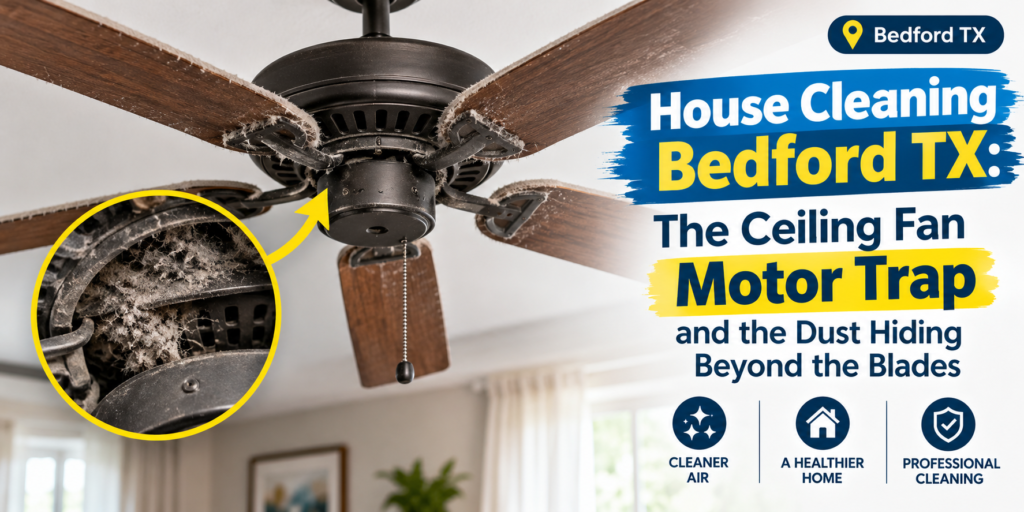
The ceiling fan motor trap refers to the dust that collects beyond the visible blade surfaces. Many people remember to wipe the top and bottom of fan blades but overlook the surrounding components that also gather airborne particles.
These areas include the motor housing, blade brackets, decorative covers, and accessible edges around the fixture. Because they sit above normal eye level, they can remain unnoticed during routine housekeeping.
The problem is not necessarily that these surfaces are difficult to clean. Instead, they are easy to forget.
Why the Motor Housing Collects Dust
The motor housing is the central part of the ceiling fan that contains and protects its motor assembly. Depending on the fan design, this housing may have rounded surfaces, narrow seams, small openings, or decorative details.
Dust can settle on the exterior of the housing just as it does on furniture, shelves, and other household surfaces. When the fan is mounted high on the ceiling, this buildup may go unnoticed until someone looks up or inspects the fixture during a detailed cleaning.
Some housings also have grooves and edges where dust is more visible against darker finishes. Brushing or wiping these areas carefully can improve the fixture’s overall appearance.
It is important to distinguish exterior cleaning from internal maintenance. Homeowners should not insert cloths or cleaning tools into motor openings or disassemble electrical components as part of ordinary dusting.
The Overlooked Blade Brackets
Blade brackets connect the fan blades to the central assembly. Depending on the design, these brackets may feature small ledges, curved surfaces, and attachment points where dust can accumulate.
Because the brackets are positioned close to the blades, they are easy to miss when cleaning quickly. A cloth may pass over the broad blade surface without reaching the smaller surrounding components.
When cleaning these areas, use a soft microfiber cloth and gentle movements. Avoid pulling on the blades or brackets, as this could loosen components or place unnecessary stress on the fixture.
Decorative Covers and Accessible Seams
Some ceiling fans include decorative collars, trim pieces, or covers around the motor housing. These details can create narrow edges where dust settles.
A quick wipe of the main housing may leave these small areas untouched. Taking a moment to inspect the accessible exterior surfaces helps create a more complete result.
However, not every opening should be cleaned directly. Ventilation openings and electrical access points should be left undisturbed unless the manufacturer’s instructions specifically describe an appropriate maintenance procedure.
Why Cleaning Only the Blades Leaves the Job Unfinished
Ceiling fan blades attract attention because they are broad, visible, and often coated with dust that becomes obvious when viewed from below. However, cleaning only the blades can leave other dusty surfaces behind.
Imagine a living room with freshly wiped fan blades, clean furniture, and a neatly arranged coffee table. If the motor housing and brackets still have visible dust, the ceiling fixture may stand out against the rest of the room.
This is particularly noticeable in spaces with dark ceiling fans, contrasting paint colors, or natural light that highlights dust along the fixture’s edges.
Dust Can Make a Clean Room Look Incomplete
Cleaning is partly about removing dirt and partly about maintaining a consistent appearance throughout the home. A room may be tidy, but dusty fixtures can make the overall result feel less polished.
This is why detailed house cleaning Bedford Texas routines should include accessible surfaces that are easy to overlook. The goal is not to clean every object every day. Instead, it is to establish a practical schedule that addresses different surfaces at appropriate intervals.
For example, a weekly cleaning routine might focus on frequently used surfaces, floors, bathrooms, and kitchen areas, while a rotating detail-cleaning schedule covers ceiling fans, upper shelves, light fixtures, and other elevated areas.
Dusting the Entire Fixture Helps Reduce Buildup
Removing dust from the blades alone leaves any remaining dust on the housing and brackets untouched. Including these components in the same cleaning session helps address more of the fixture’s exterior.
Regular dust removal also makes future maintenance easier. A light layer of dust is generally simpler to remove than a thick accumulation mixed with moisture or other household residue.
If a fan has not been cleaned for a long time, avoid aggressive scrubbing. A gentle first pass with an appropriate dry cloth or brush can help remove loose particles before any additional cleaning is considered.
What Causes Dust to Accumulate on Ceiling Fans?
Dust is a normal part of indoor life. It can contain varying combinations of fabric fibers, tracked-in soil, outdoor particles, hair, and other small materials.
The amount that settles on a ceiling fan depends on several factors, including the room’s activity, ventilation, housekeeping habits, and the fan’s design.
Everyday Household Activity
Walking, sitting on upholstered furniture, handling fabrics, and moving household items can release small particles into the air. Open windows and doors may also allow outdoor dust to enter.
Over time, some of these particles settle on elevated surfaces, including fan blades and motor housings.
Rooms that receive frequent use may need more regular dusting than spaces that are rarely occupied.
Fan Design and Surface Details
Not all ceiling fans collect dust in the same way. A simple design with smooth exterior surfaces may be easier to maintain than a fixture with multiple decorative details.
Textured finishes, narrow ledges, and exposed brackets can make dust more noticeable or difficult to remove with one quick pass.
When choosing a cleaning method, consider the material and finish of the fixture. Delicate coatings may require a soft cloth and a manufacturer-approved cleaning approach.
Cleaning Habits and Missed Areas
Dust can accumulate more noticeably when elevated surfaces are routinely excluded from household cleaning.
For example, someone may clean countertops, vacuum carpets, and wipe tables every week while forgetting the ceiling fan for several months. The difference in cleaning frequency allows the fixture to become a visible exception to an otherwise clean room.
Consistent residential cleaning Bedford routines can help prevent this problem by assigning elevated surfaces a regular place on the household checklist.
How to Clean Ceiling Fan Motors and Brackets Safely
Cleaning the exterior of a ceiling fan does not have to be complicated. The most important considerations are personal safety, protecting the fixture, and avoiding unnecessary contact with electrical components.
Step 1: Turn Off the Fan and Let It Stop Completely
Switch the fan off and wait until the blades stop moving. If the cleaning instructions or the task require contact with components near electrical parts, turn off the appropriate circuit breaker before proceeding.
Never clean a moving fan or attempt to reach around rotating blades.
Use a stable, appropriately sized ladder on a level surface if the fixture cannot be reached safely from the floor. Do not lean sideways or stand on furniture to reach overhead surfaces.
If the fan is too high or the ladder position is unsafe, leave the task to a qualified professional.
Step 2: Protect the Area Below the Fan
Place a washable cloth or suitable covering beneath the work area to catch falling dust. Move nearby items that could be affected by debris.
This is especially helpful when cleaning fans above beds, sofas, desks, dining tables, or other furniture.
Protecting the area also reduces the amount of follow-up cleaning needed after the fixture is finished.
Step 3: Remove Loose Dust From the Blades
Use a soft microfiber cloth or a suitable ceiling fan cleaning tool to remove loose dust from the blades.
Work carefully along each surface rather than pressing down or bending the blades. Clean the upper surfaces as well as the visible undersides whenever they can be reached safely.
If using a specialized fan duster, follow the product instructions to avoid damaging the blade finish.
Step 4: Wipe the Motor Housing
Once the blades are clean, inspect the exterior motor housing. Use a soft, dry microfiber cloth to remove loose dust from the accessible outer surfaces.
For narrow exterior edges, a soft brush may help lift particles without scratching the finish.
Avoid spraying liquid directly onto the fan. Do not allow moisture to enter the motor, electrical openings, or other internal components. Never insert a cloth or brush into openings in an attempt to clean the inside of the housing.
If the housing has unusual discoloration, excessive heat, a burning smell, or signs of electrical damage, stop and contact a qualified technician.
Step 5: Clean the Blade Brackets
Carefully wipe the accessible brackets connecting the blades to the fan assembly.
Pay attention to visible ledges and corners where dust may settle. Use gentle movements and avoid pulling, twisting, or applying pressure to the brackets.
If a bracket appears loose or damaged, do not attempt to tighten or repair it while cleaning. Have the fixture inspected according to the manufacturer’s recommendations.
Step 6: Inspect Decorative Details and Finish the Area
Check the accessible exterior trim, decorative covers, and other exposed surfaces. Remove any remaining loose dust with an appropriate soft cleaning tool.
Afterward, inspect the surrounding area and remove any dust that fell onto nearby furniture or flooring.
A final visual check helps ensure that the entire accessible fixture looks consistent rather than leaving a freshly cleaned blade next to a dusty motor housing.
How Often Should You Clean a Ceiling Fan?
There is no single schedule that works for every household. The right frequency depends on how quickly dust becomes visible and how the room is used.
For many homes, a practical starting point is to inspect ceiling fans every few weeks and dust them as needed. Rooms with pets, frequent activity, open windows, or visible dust accumulation may require more frequent attention.
Consider the following routine:
- Weekly: Check high-use rooms for visible dust and include any noticeably dusty accessible surfaces in the regular cleaning routine.
- Every few weeks: Inspect ceiling fan blades, motor housings, and brackets in commonly used rooms.
- Monthly or as needed: Include less frequently used rooms and fixtures that do not show noticeable buildup as quickly.
- Seasonally: Review elevated surfaces throughout the home and address areas that may have been missed during routine cleaning.
These are general guidelines rather than strict requirements. Follow the fan manufacturer’s maintenance instructions whenever they recommend a different approach.
Other Elevated Areas That Deserve Attention
The ceiling fan motor trap is one example of how dust can remain unnoticed above normal eye level. Once homeowners start inspecting elevated surfaces, they may identify several other areas that deserve occasional attention.
Light Fixtures and Lampshades
Dust can settle on the tops of lampshades, exterior light fixture surfaces, and accessible decorative details. Always switch off lights and allow bulbs to cool before cleaning.
Use methods appropriate to the fixture’s material, and avoid introducing moisture into electrical components.
Upper Shelves and Cabinet Tops
Bookshelves, display cabinets, and kitchen cabinets can collect dust along their upper surfaces. These areas may be especially easy to miss when the main focus is on counters and eye-level furniture.
A rotating schedule helps address them without adding too much work to every cleaning session.
Door Frames and Decorative Trim
The upper edges of door frames, picture frames, and decorative molding may collect fine dust over time. These surfaces are often small, but cleaning them can help create a more consistent appearance throughout the room.
Vent Covers and Accessible Exterior Surfaces
Dust may also be visible on the exterior of vent covers. Clean only accessible surfaces using an appropriate method, and do not insert tools into ductwork or disturb electrical or mechanical components.
If ventilation systems require internal cleaning or maintenance, consult an appropriately qualified service provider.
Why a Detailed Cleaning Routine Makes a Difference
A well-organized cleaning routine addresses both frequently touched surfaces and the less obvious areas that contribute to the overall appearance of a home.
For busy homeowners, the challenge is often not knowing what to clean but remembering every detail while managing work, family responsibilities, and daily activities.
This is where professional cleaning can help.
Standard Cleaning and Detailed Cleaning Have Different Priorities
A standard cleaning visit generally concentrates on maintaining commonly used areas, such as kitchens, bathrooms, floors, and accessible surfaces. The exact tasks depend on the service agreement.
A deep cleaning Bedford TX appointment may be appropriate when a home needs additional attention to accumulated dust, neglected surfaces, and other areas included in the provider’s deep-cleaning checklist.
However, ceiling fan cleaning should never be assumed to be included automatically. Homeowners should confirm whether the service covers accessible fan blades, motor housings, brackets, or other elevated fixtures.
The same applies when arranging move out cleaning Bedford or move in cleaning Bedford TX. A move-related cleaning service may have specific inclusions and exclusions, particularly for high ceilings or fixtures that require special equipment.
Recurring Service Helps Keep Details on Schedule
A recurring cleaning arrangement can make it easier to maintain a consistent household routine.
Homeowners considering weekly cleaning Bedford TX may benefit from asking their provider how detailed tasks are handled between visits. Some tasks may be completed during every appointment, while others are better suited to a rotating schedule or a separate add-on.
If you are comparing maid service Bedford TX options, ask about the scope of work rather than relying on the service name alone.
A clear checklist helps both homeowners and cleaning professionals understand expectations and avoid overlooking important details.
Choosing the Right House Cleaning Bedford TX Service
When comparing cleaning providers, consider the services you need, your home’s layout, and whether the company can accommodate your preferred schedule.
A thoughtful comparison can help you find a service that fits your home instead of paying for tasks that do not match your priorities.
Ask About Included Tasks
Before booking, ask whether the cleaning checklist includes elevated surfaces and accessible ceiling fan components.
This is especially important if your home has high ceilings, multiple fans, decorative fixtures, or surfaces that have not been cleaned in a while.
Compare Different Types of Cleaning
Depending on your needs, you may want to explore apartment cleaning Bedford, office cleaning Bedford TX, or commercial cleaning Bedford services. Residential and commercial properties can have different cleaning requirements, so confirm that the provider handles your specific property type.
Homeowners preparing for renovations or dealing with construction dust may also want to ask about post construction cleaning Bedford and whether additional dust removal is needed.
For other household needs, carpet cleaning Bedford TX may be a separate service rather than part of a standard housekeeping visit.
Look for Clear Pricing and Reliable Communication
When comparing a cleaning company Bedford TX, ask for a clear explanation of pricing, included tasks, scheduling, and any additional fees.
If you are researching the best cleaners in Bedford TX, consider factors such as consistency, communication, service scope, and how the company responds to questions.
The same applies when evaluating a top cleaning company Bedford Texas or searching for reliable house cleaning services in Bedford TX. A provider should be able to explain what its team can safely clean and which tasks require special arrangements.
Homeowners who want an affordable maid service Bedford or affordable deep cleaning services in Bedford should compare the full scope of service instead of focusing only on the lowest advertised price.
For customers who prefer environmentally conscious products, ask whether eco friendly cleaning Bedford options are available and suitable for the surfaces in your home.
It is also worth checking whether the provider offers same day cleaning Bedford TX when an unexpected need arises. Same-day availability depends on the schedule and should be confirmed directly.
Finally, homeowners searching for professional cleaners Bedford, professional maid service near Bedford Texas, or trusted home cleaners in Bedford Texas should look for clear service expectations, dependable communication, and a cleaning plan tailored to the property.
Simple Habits That Help Prevent the Ceiling Fan Motor Trap
You do not need an elaborate system to keep ceiling fans looking clean. A few consistent habits can make the task easier.
- Add ceiling fan inspections to your regular household checklist.
- Clean the motor housing and brackets whenever you dust the blades.
- Use soft tools that are appropriate for the fan’s finish.
- Keep a stable ladder and safe access practices in mind, or hire a professional for hard-to-reach fixtures.
- Avoid spraying liquids directly onto the fan or inserting tools into motor openings.
- Schedule occasional detailed cleaning for elevated surfaces throughout the home.
- Confirm the scope of professional cleaning services before booking.
The key is consistency. When the motor housing and brackets are cleaned alongside the blades, there is less opportunity for these overlooked surfaces to remain dusty for long periods.
Conclusion: Complete Your Ceiling Fan Cleaning With House Cleaning Bedford TX
The ceiling fan motor trap is a small but important reminder that a clean-looking fixture requires attention beyond its most visible surfaces. Dust can collect on motor housings, blade brackets, decorative covers, and accessible exterior details even when the blades themselves appear spotless.
By cleaning these areas carefully, following manufacturer instructions, and establishing a practical maintenance schedule, homeowners can keep their ceiling fans looking better and prevent neglected dust from becoming a recurring problem.
For households that need help maintaining these details, professional House Cleaning Bedford TX services can provide a convenient way to keep cleaning tasks organized. Whether you need regular upkeep, a more detailed cleaning appointment, or help preparing a property for a move, discuss your priorities with your cleaning provider and confirm which tasks are included.
Walo Maids understands that a well-maintained home is about more than the obvious surfaces. Paying attention to the little details, from ceiling fan brackets to overlooked corners, helps create a fresher, more polished living space. With a consistent routine and the right cleaning approach, the ceiling fan motor trap does not have to remain a hidden source of dust.
Contact us at 214–390–3387 or visit https://walomaids.com/bedford-tx-house-cleaning-and-maid-services/ to book your service.