When you want a bathroom to look clean and fresh, bleach can seem like the obvious solution. It is powerful, familiar, and commonly used to tackle stains, mildew, and germs. But using too much bleach, using it on the wrong surface, or leaving it sitting too long can actually damage your bathroom. For homeowners looking for House Cleaning Wylie TX, understanding when bleach helps — and when it hurts — can make a big difference.
Bleach is not a universal bathroom cleaner. It can discolor certain materials, weaken surfaces, damage finishes, and create dangerous fumes when mixed with other cleaning products. A bathroom may look spotless after a bleach-heavy cleaning, but repeated misuse can leave behind permanent damage.
At Walo Maids, we believe effective cleaning is about more than making a surface look clean for the moment. It is also about protecting the materials inside your home so they stay in good condition.
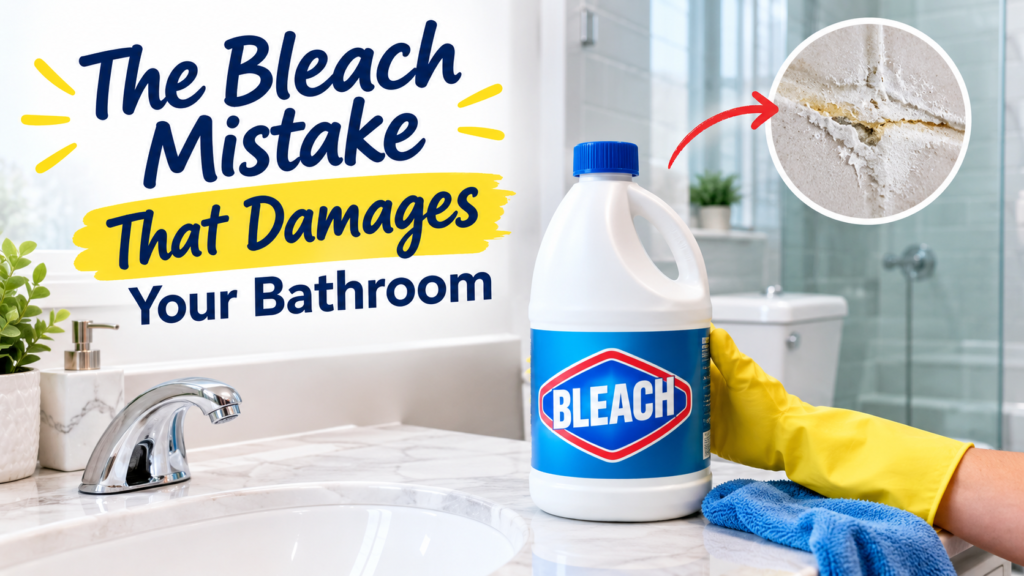
The Biggest Bleach Mistake: Using It on Everything
One of the most common cleaning mistakes is treating bleach like an all-purpose bathroom cleaner.
Bleach can be useful in specific situations, but that does not mean it belongs on every bathroom surface. Bathrooms contain a mixture of materials, including tile, grout, natural stone, metal fixtures, painted surfaces, acrylic, fiberglass, glass, and plastic.
Each material reacts differently to strong chemicals.
For example, a product that works well for disinfecting one surface may cause discoloration or deterioration on another. Using concentrated bleach repeatedly can also cause gradual damage that is not immediately noticeable.
Instead of asking, “Will bleach clean this?” ask:
“Is bleach safe for this particular surface?”
That simple question can prevent many expensive cleaning mistakes.
Why Bleach Can Damage Bathroom Surfaces
Bleach is a strong chemical oxidizer. Its cleaning and disinfecting abilities are part of what makes it useful, but its strength is also why it needs to be handled carefully.
Repeated exposure can affect certain finishes and materials.
Some potential problems include:
- Discoloration
- Fading
- Surface deterioration
- Damage to protective finishes
- Corrosion of certain metals
- Weakening of some materials
- Damage to colored grout
- Staining or discoloration of fabrics and bath mats
- Strong chemical odors
The damage can become more likely when bleach is used at high concentrations or allowed to sit on a surface longer than recommended.
This is particularly important for homeowners who regularly perform deep cleaning Wylie TX services themselves and assume that stronger chemicals automatically produce better results.
They do not.
More product does not necessarily mean a cleaner bathroom.
Bleach and Natural Stone: A Risky Combination
Natural stone is one of the surfaces that deserves extra attention.
Bathrooms may contain marble, limestone, travertine, slate, or other natural stone materials. These materials can be sensitive to harsh cleaners and may require products specifically designed for stone.
Using the wrong cleaner can damage the stone’s finish or contribute to dullness and other surface problems.
What Should You Do Instead?
Always check the manufacturer’s care recommendations for natural stone before applying a chemical cleaner.
For routine cleaning, a cleaner specifically labeled as safe for the particular type of stone is generally a better choice than reaching for household bleach.
If you are unsure what material you have, do not experiment with increasingly strong products. Identifying the surface first can save you from an expensive repair.
The Grout Problem Homeowners Often Miss
Grout can be tricky because homeowners often associate white grout with bleach.
If grout looks dark or dingy, it is tempting to pour or spray bleach directly onto it and let it sit.
Sometimes this can make certain stains appear lighter, but that does not make it the best routine cleaning method for every type of grout.
Colored grout, in particular, may be vulnerable to discoloration. Repeated exposure to strong chemicals can also create problems depending on the grout and surrounding materials.
Clean Grout Without Automatically Reaching for Bleach
Start with a cleaner appropriate for the type of tile and grout you have.
Use a soft or appropriately firm brush to work into the grout lines, and give the cleaner enough contact time according to its label instructions.
For stubborn buildup, several gentle cleaning sessions may be safer than repeatedly soaking the area in a harsh chemical.
The goal is not simply to make grout look white.
The goal is to remove the dirt while protecting the material underneath.
Bleach Can Be Hard on Metal Fixtures
Your bathroom probably contains plenty of metal, from faucets and shower fixtures to drains, handles, and hardware.
Bleach can be problematic for certain metals and finishes, especially when it is used repeatedly or left on the surface.
A fixture may initially look shiny after cleaning, but improper chemical exposure can contribute to corrosion, discoloration, or deterioration of the finish over time.
A Better Approach for Fixtures
Use a cleaner recommended for the specific finish.
When cleaning faucets and other fixtures, apply the appropriate product to a cloth or sponge rather than automatically soaking the entire fixture in bleach.
After cleaning, rinse or wipe away product residue according to the cleaner’s directions and dry the surface.
Keeping water spots and soap residue under control can also reduce the temptation to use increasingly aggressive chemicals later.
Never Mix Bleach With Other Cleaners
This is one of the most important bathroom cleaning rules.
Never mix bleach with other cleaning products unless the product manufacturer specifically states that the combination is safe.
Bleach can react with certain chemicals and create dangerous gases.
In particular, mixing bleach with products containing ammonia or certain acids can create hazardous fumes.
That means you should not experiment with combinations such as:
- Bleach and ammonia
- Bleach and vinegar
- Bleach and acidic toilet cleaners
- Bleach and other unknown cleaning chemicals
You also should not assume that rinsing one product away quickly makes it safe to apply another chemical immediately afterward.
If you are switching products, follow the product labels carefully and make sure the area is appropriately rinsed and ventilated.
When in doubt, use one appropriate cleaning product at a time.
The “Let It Sit Longer” Mistake
Another common mistake is assuming that leaving bleach on a surface for a long time will produce better results.
It may seem logical: if a few minutes helps, then an hour must help even more.
That is not how cleaning products work.
Every product has directions for a reason. Contact time, dilution, application method, and surface compatibility all matter.
Leaving a strong chemical on a surface longer than recommended can increase the chance of damage without necessarily providing a better cleaning result.
Always follow the product label instead of creating your own contact time.
Your Bathroom Doesn’t Need Bleach for Every Cleaning Job
A clean bathroom involves much more than killing germs.
Most everyday bathroom messes consist of soap residue, toothpaste, body oils, dust, hair, hard-water deposits, and other everyday buildup.
Different problems require different cleaning approaches.
For Soap Scum
A bathroom cleaner formulated to break down soap scum may be more appropriate than bleach.
Soap scum is not something that automatically disappears simply because a cleaner contains a strong disinfectant.
For Hard-Water Deposits
Mineral deposits are another common problem.
If your shower doors, faucets, or fixtures have white or cloudy buildup, using an appropriate mineral or hard-water cleaner may be more effective than bleach.
For Everyday Dirt
For routine cleaning, a general bathroom cleaner that is compatible with the surface is often sufficient.
There is no need to use the strongest chemical available when a milder product can accomplish the job.
What About Mold and Mildew?
This is where bleach can sometimes have a legitimate role, but context matters.
Bathrooms are naturally humid environments, and moisture can contribute to mold and mildew growth.
However, spraying bleach on every dark spot does not address the underlying moisture problem.
If mildew keeps returning, look at the conditions around it.
Possible contributors include:
- Poor ventilation
- Excess humidity
- Leaking plumbing
- Wet shower curtains
- Damp towels
- Water collecting around fixtures
- Areas that remain wet after use
A bathroom fan can help reduce moisture, but it needs to be used appropriately. Opening doors or windows when practical can also improve ventilation.
If you repeatedly clean the same mildew only to see it return, the problem may require more than another round of bleach.
The Right Way to Think About Bathroom Cleaning
Instead of organizing your cleaning routine around specific chemicals, organize it around the type of mess and the surface.
Think of it this way:
Surface first. Cleaner second.
Before grabbing a bottle, identify what you are cleaning.
Is it:
- Porcelain?
- Ceramic tile?
- Natural stone?
- Glass?
- Chrome?
- Stainless steel?
- Painted drywall?
- Acrylic?
- Fiberglass?
- Plastic?
Then choose a product that is appropriate for that material.
This approach is especially helpful when performing residential cleaning Wylie homeowners can safely maintain between professional visits.
A Simple Bathroom Cleaning Routine
You do not need an arsenal of harsh chemicals to keep your bathroom looking fresh.
A basic routine can include:
1. Remove Clutter
Take towels, toiletries, bath mats, and other removable items out of the way.
This makes it easier to reach the surfaces that actually need cleaning.
2. Dust and Remove Hair
Before adding water or cleaning products, remove loose hair and dust from floors, corners, shelves, and other surfaces.
This prevents you from turning dry debris into wet, sticky residue.
3. Clean High-Touch Areas
Pay attention to handles, faucets, light switches, toilet handles, and other frequently touched surfaces.
Use an appropriate cleaner and follow the product directions.
4. Tackle Soap and Product Buildup
Clean showers, tubs, sinks, and other areas where soap and personal-care products accumulate.
Use a product designed for the specific type of buildup.
5. Clean the Toilet
Use a toilet cleaner appropriate for the bowl and follow its instructions.
Do not mix toilet cleaners with bleach or other chemicals.
6. Finish the Floor
Vacuum or sweep first, then mop with a compatible floor cleaner.
This prevents loose debris from becoming muddy during mopping.
When Professional Cleaning Can Help
Sometimes a bathroom does not simply need another stronger chemical.
It needs a more thorough cleaning process.
Professional Wylie cleaning services can help homeowners tackle accumulated dirt, soap residue, dust, and buildup using cleaning methods suited to the surfaces being treated.
This can be especially useful for bathrooms that have been neglected, bathrooms in busy households, or homes preparing for guests.
Professional cleaning also gives homeowners a chance to step away from the cycle of constantly trying stronger products to solve the same problem.
If a bathroom has persistent discoloration, recurring mildew, damaged grout, or deteriorating fixtures, cleaning may not be the only solution. In some situations, repairs or professional restoration may be necessary.
What About Move-In and Move-Out Cleaning?
Bathrooms are often one of the most important areas during a move.
For a move in cleaning Wylie TX service, the goal is to start with a fresh space before your belongings arrive. That can include detailed attention to bathrooms, kitchens, floors, and commonly touched surfaces.
For a move out cleaning Wylie service, bathrooms need careful attention because visible buildup can affect how clean the entire property appears.
But even during a deep clean, stronger does not automatically mean better.
A professional cleaner should still consider the surface before selecting the cleaning method.
How Walo Maids Approaches Bathroom Cleaning
At Walo Maids, cleaning is not about spraying the strongest product possible and hoping for the best.
It is about understanding what needs to be cleaned, selecting an appropriate method, and paying attention to the details that make a home feel genuinely clean.
That means recognizing the difference between:
- Soap scum and mineral buildup
- Dirt and discoloration
- Routine cleaning and deep cleaning
- Surface-safe cleaners and unnecessarily harsh chemicals
- A temporary improvement and long-term surface care
Whether you need routine House Cleaning Wylie TX or a more detailed cleaning, taking care of your home’s surfaces is part of taking care of your home itself.
The Bottom Line: Bleach Is a Tool, Not a Universal Cleaner
Bleach can be useful when used correctly, but it should not automatically be the first product you reach for every time your bathroom looks dirty.
The biggest mistake is assuming that stronger chemicals, larger amounts, or longer contact times always produce better results.
They can do the opposite.
Before using bleach, consider the surface, read the product instructions, provide proper ventilation, and never mix it with other cleaners.
For everyday bathroom cleaning, choose products based on the type of dirt and the material you are cleaning.
And if your bathroom needs more than a quick wipe-down, professional House Cleaning Wylie TX services can provide the detailed cleaning your home needs without relying on unnecessary chemical overuse.
A truly clean bathroom should look fresh and stay in good condition. That is the difference between simply cleaning a surface and cleaning it the right way.
Contact us at 214–390–3387 or visit https://walomaids.com/wylie-tx-house-cleaning-and-maid-service/ to book your service.