
Have you ever looked up at your ceiling and noticed a dark ring forming around a light fixture? These marks can make an otherwise clean room look dusty, neglected, or older than it really is. For homeowners looking for House Cleaning Arlington TX, understanding why these mysterious ceiling marks appear can help prevent buildup, protect painted surfaces, and keep the entire home looking fresh. While the area around a ceiling light may seem too high to collect much dirt, it can actually become a hotspot for airborne particles, moisture, and heat-related residue.
The dark halo around a ceiling fixture is not always caused by a lack of cleaning. In many homes, it develops gradually as everyday activities release tiny particles into the air. Cooking, showering, burning candles, using fireplaces, and even walking across carpeted floors can contribute to indoor airborne debris. As air circulates through a room, these particles move toward ceilings and other surfaces, where they can accumulate around light fixtures.
Heat from the fixture and differences in airflow near the ceiling can also influence where particles settle. When moisture is present, some particles may cling more readily to painted surfaces. Over time, this combination can create a visible ring that becomes difficult to ignore.
Understanding the ceiling light halo is the first step toward dealing with it properly. With the right cleaning methods, better ventilation, and consistent maintenance, homeowners can reduce visible buildup and help prevent dark rings from returning.
What Is the Ceiling Light Halo Effect?
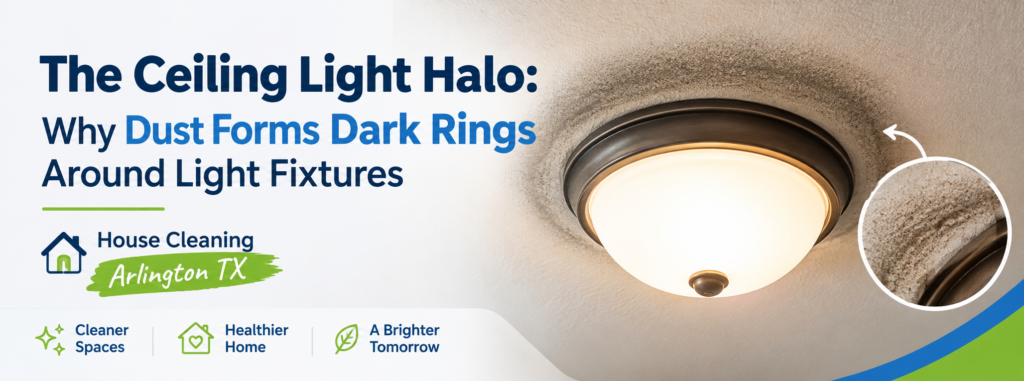
The ceiling light halo effect describes a dark or grayish ring that forms around a ceiling light, recessed fixture, pendant light, or other ceiling-mounted lighting feature. The discoloration may appear as a faint shadow at first, eventually becoming a more noticeable circle or irregular patch.
Although the marks may look like ordinary dust, they can consist of several types of residue. Fine airborne particles may combine with household oils, combustion byproducts, moisture, and other contaminants. The precise composition depends on the home’s ventilation, lighting equipment, daily activities, and ceiling material.
The halo is often easier to see against white or light-colored ceilings. Even a relatively thin layer of residue can stand out when the surrounding paint is bright and uniform.
Why Does the Buildup Form in a Ring?
The shape of the discoloration often relates to how air moves around the fixture and how particles interact with the ceiling surface.
Depending on the lighting design, heat may rise from the fixture and create small air currents. These currents can carry airborne particles toward the ceiling or change where they settle. The fixture itself can also affect airflow, producing areas where particles accumulate unevenly.
In some cases, the ring may reflect the outline of the fixture’s housing or the surrounding airflow pattern. In others, the discoloration may extend farther in one direction because of nearby vents, fans, or room-specific air movement.
Not every dark ring has the same cause. A ceiling halo should therefore be treated as a clue about the room’s conditions rather than proof of a single cleaning problem.
How Airborne Particles Contribute to Dark Rings
Air inside a home is constantly moving. Heating and cooling systems circulate it, doors open and close, people move between rooms, and everyday activities release particles into the environment. Many of these particles are too small to see individually, but they can become visible when they collect on a surface.
Ceilings are particularly easy to overlook because they are outside the normal cleaning routine. While homeowners regularly wipe countertops and vacuum floors, the upper surfaces of rooms may go months or years without attention.
Everyday Sources of Airborne Dust
Several common household activities can increase the number of particles circulating indoors.
- Cooking: Frying, searing, and other cooking methods can release fine particles, especially when food produces smoke or oil aerosols.
- Candles and incense: Burning these products can release soot and other fine combustion particles.
- Fireplaces: Wood burning may contribute smoke particles that travel beyond the immediate area.
- Carpet and upholstery: Movement across soft surfaces can resuspend settled dust, fibers, and other debris.
- Open windows and doors: Outdoor dust, pollen, and other particles may enter the home.
- Household activities: Cleaning, handling fabrics, and moving furniture can temporarily send settled particles back into the air.
These particles do not necessarily land evenly throughout a room. Air currents, temperature differences, surface textures, and obstructions influence where they eventually settle.
Why Ceiling Fixtures Become Collection Points
A ceiling light can alter the movement of air around it. The fixture’s shape may create small areas of turbulence, while its housing can influence how warm air moves along the ceiling.
When airborne particles encounter a surface, some remain suspended while others settle. Fine particles may gradually collect in areas where airflow encourages deposition. If the ceiling paint also contains a thin film of household residue, particles may adhere more readily.
This process happens slowly. A single day of cooking or ordinary household activity is unlikely to create a dramatic ring. Repeated exposure over weeks or months can produce a more noticeable result.
For homeowners seeking Arlington cleaning services, paying attention to these overlooked overhead areas can make a difference in the overall appearance of a room.
The Role of Moisture in Ceiling Discoloration
Moisture is another factor that may contribute to dark buildup around light fixtures. Water vapor from showers, cooking, boiling water, and other household activities can increase indoor humidity. When that moisture interacts with airborne particles and painted surfaces, it may influence how residue accumulates.
Moisture does not automatically cause a ceiling halo, and not every ring indicates a humidity problem. However, in rooms where ventilation is poor, damp air can contribute to conditions that make surface residue and discoloration more noticeable.
How Humidity Affects Dust Buildup
Dust is a mixture of materials, including fibers, soil, skin flakes, pollen, and other particles. Depending on their composition, some particles can interact with moisture and surface films differently from others.
When humidity is elevated, particles and residues may become more likely to adhere to certain surfaces. Repeated changes in humidity can also affect the appearance of painted ceilings, particularly if the surface already has accumulated grime.
Bathrooms and kitchens deserve special attention because they frequently produce steam and airborne residue.
In a bathroom, a hot shower can send moisture upward toward the ceiling. In a kitchen, steam and cooking aerosols may rise toward overhead surfaces. If ventilation is insufficient, these byproducts may linger longer than they would in a well-ventilated room.
When a Dark Ring May Be More Than Dust
A dark ring that wipes away gently may be ordinary surface residue. However, some types of ceiling discoloration need further investigation.
Watch for these warning signs:
- Yellow, brown, or spreading stains that may indicate a leak.
- Peeling, bubbling, or soft paint.
- Persistent dampness or water marks around the fixture.
- Musty odors or visible mold-like growth.
- Discoloration that returns quickly despite appropriate cleaning.
Water can travel along ceiling materials before becoming visible, so the stain may not appear directly beneath the source of a leak.
If a mark is spreading, the ceiling feels damp, or you suspect moisture around electrical components, do not simply wipe the area and move on. Address the source first and have the area assessed by a qualified professional when necessary.
How Heat From Light Fixtures Influences Buildup
Heat can influence airflow and particle movement around ceiling fixtures, but its role depends on the type of light, fixture design, installation, and surrounding conditions.
Older incandescent bulbs typically release more heat into their surroundings than comparable LED bulbs. Recessed fixtures, enclosed housings, and fixtures installed near insulation may also have different airflow characteristics.
As warm air rises and spreads along a ceiling, it can carry suspended particles with it. Temperature differences between the fixture, ceiling, and surrounding air may contribute to circulation patterns that affect where particles settle.
Can Heat Make Dust Stick to the Ceiling?
Heat does not automatically turn dust into a dark stain. Instead, it can contribute indirectly by influencing air movement and the behavior of airborne residue.
For example, a fixture located near a kitchen may be exposed to a combination of warm air, fine cooking particles, and household oils. Over time, that mixture may leave a film on the ceiling. Additional dust can collect on the film, making the area appear darker.
In other rooms, the ring may be caused primarily by soot or general particulate buildup rather than heat itself.
This distinction matters because simply changing a light bulb will not necessarily remove an existing halo. Cleaning the surface, improving ventilation where needed, and investigating other possible causes are more effective ways to address the problem.
Why Different Fixtures Develop Different Halos
Not all ceiling lights produce the same conditions.
- Recessed lights: Their housings can influence airflow near the ceiling, depending on the design and installation.
- Pendant lights: The shade and mounting arrangement can change the way warm air and particles move around the fixture.
- Flush-mount lights: The housing may create a distinct boundary where residue becomes visible.
- Older fixtures: Heat output, dust accumulation, and aging paint may all contribute to the appearance of the surrounding area.
The absence of a halo around one fixture does not mean the other fixture is defective. Room conditions, ventilation, cooking habits, and ceiling finishes can all make a difference.
Why the Ceiling Light Halo Becomes Darker Over Time
A faint ring can become increasingly noticeable because household residue accumulates gradually. The longer the ceiling goes without being inspected or cleaned, the more opportunity particles have to settle and combine with existing surface films.
The color of the residue also affects how visible it becomes. Dust may appear gray, while soot and certain cooking residues can look brown or nearly black. In some homes, the discoloration may be a combination of several materials.
The Difference Between Loose Dust and Stubborn Grime
Loose dust usually rests on the surface and can sometimes be removed with gentle dusting. Stubborn grime is more difficult because particles may be attached to a thin layer of oils or other residue.
This is why aggressively wiping a dark ring is not always the best solution. Pressing too hard or using the wrong cleaner can spread the residue, damage the paint, or leave a shiny patch that looks different from the surrounding ceiling.
The safest approach is to begin with the least aggressive cleaning method and test it on a small, inconspicuous area.
Why White Ceilings Show the Problem More Clearly
Light-colored ceilings make small differences in color easier to spot. A thin gray ring may be almost invisible on a darker or textured surface but highly noticeable against fresh white paint.
Ceiling texture can also complicate cleaning. Textured finishes may trap particles in small grooves, making residue harder to remove without damaging the surface.
If a halo remains after gentle cleaning, the discoloration may have penetrated the paint or the finish may have changed. In that case, repainting with an appropriate stain-blocking primer may be more effective than repeated scrubbing.
How to Clean Dark Rings Around Ceiling Light Fixtures Safely
Cleaning overhead surfaces requires preparation, patience, and attention to safety. Before attempting to remove a ceiling light halo, determine whether the mark appears to be ordinary surface residue or a sign of moisture damage.
Step 1: Make the Area Safe
Turn off the light and allow the fixture and bulb to cool completely. If the fixture must be handled or cleaned close to electrical components, switch off the appropriate circuit at the breaker.
Never spray liquid cleaner directly onto a light fixture, electrical housing, or ceiling opening. Avoid cleaning a fixture that is wet or showing signs of electrical damage.
Use a stable ladder positioned on a level surface. Do not lean sideways to reach around a fixture, and ask another adult to assist if needed.
Step 2: Remove Loose Dust First
Use a clean microfiber cloth attached to an appropriate extension tool or a soft dusting attachment to remove loose particles.
Work gently to avoid spreading the dust across the ceiling. If using a vacuum attachment, choose a soft brush and avoid pressing against fragile paint or textured finishes.
Starting with dry dust removal helps prevent loose particles from turning into a muddy residue when moisture is introduced.
Step 3: Test a Gentle Cleaning Method
If a mark remains, check the ceiling paint manufacturer’s cleaning recommendations when available. Lightly dampen a soft cloth with water and test a small, inconspicuous area.
If the finish tolerates it, use a mild cleaning solution appropriate for the painted surface. Wring out the cloth thoroughly so it is damp rather than wet.
Avoid harsh abrasives, strong chemicals, and excessive scrubbing. Flat or matte paint can be particularly sensitive to rubbing and may develop shiny patches.
Step 4: Work Slowly Around the Fixture
Gently wipe the affected ceiling area without allowing moisture to enter the fixture or electrical opening. Rinse or change the cloth as needed so you are not transferring dark residue back onto the surface.
If the stain does not improve after a few gentle attempts, stop rather than applying increasing pressure. Persistent discoloration may require a different approach, professional assessment, or repainting.
Step 5: Let the Surface Dry and Inspect It
Allow the ceiling to dry completely before judging the results. Damp paint can temporarily appear darker, which may make it difficult to tell whether the stain has been removed.
If the ring remains visible or quickly returns, investigate possible sources such as cooking residue, poor ventilation, smoke, or moisture intrusion.
Preventing the Ceiling Light Halo From Returning
Once the ceiling is clean, a few maintenance habits can help reduce the amount of residue that collects around fixtures.
Improve Indoor Air Circulation and Ventilation
Use kitchen exhaust fans when cooking, particularly when frying or preparing foods that release smoke or grease. In bathrooms, run the exhaust fan during showers and for the recommended period afterward.
Make sure ventilation systems are maintained according to manufacturer recommendations. Replace HVAC filters on the appropriate schedule and use a filter compatible with your system.
Better ventilation can help manage airborne particles and moisture, although it will not eliminate every source of indoor dust.
Reduce Sources of Smoke and Fine Particles
Consider the activities that take place near the affected fixture. If dark rings appear most often in kitchens or rooms where candles are frequently burned, reducing smoke and airborne residue may help.
Keep cooking areas clean, use appropriate ventilation, and avoid allowing smoke to accumulate indoors. Regularly cleaning nearby surfaces can also reduce the amount of residue available to become airborne again.
Add Ceiling Edges to Your Cleaning Routine
Ceilings, corners, vents, and light fixtures are easy to overlook because they are not part of everyday surface cleaning.
Include overhead dusting in a periodic maintenance schedule, adjusting the frequency according to the room’s use and how quickly dust returns. Kitchens and bathrooms may need more attention than guest rooms or lightly used spaces.
A simple checklist can help:
- Dust ceiling corners and accessible overhead surfaces.
- Inspect the areas surrounding light fixtures for discoloration.
- Clean vent covers and nearby surfaces as recommended.
- Check bathrooms and kitchens for excess humidity or poor ventilation.
- Investigate new stains before they become widespread.
Regular maintenance is especially helpful for households that want their home to look consistently clean between professional visits.
When Professional House Cleaning Can Help
Some ceiling halos can be removed with careful dusting and gentle cleaning. Others require more attention because of their location, the type of residue, or the condition of the ceiling finish.
Professional cleaners can help identify ordinary surface buildup, safely address accessible overhead dust, and incorporate neglected areas into a broader home cleaning routine. They can also help homeowners recognize when a mark appears to be beyond the scope of routine cleaning.
For residents comparing maid service Arlington TX options, it is useful to ask what the service includes. Ceiling and light-fixture cleaning may not be part of every standard package, and access to high ceilings or delicate fixtures may require special arrangements.
A deep cleaning Arlington TX service may be appropriate when overhead dust is part of a larger pattern of neglected areas, including ceiling corners, vents, baseboards, and hard-to-reach surfaces. However, deep cleaning is not a substitute for repairing a roof leak, correcting a ventilation problem, or addressing damaged paint.
When choosing professional cleaners Arlington, ask about the company’s cleaning methods, equipment, safety procedures, and policies for high or delicate fixtures. A reliable service should explain what can be cleaned safely and when another specialist may be needed.
Other Overlooked Areas That Can Reveal Household Dust Buildup
The ceiling light halo is one example of how particles can accumulate in places that are not part of everyday cleaning. Looking at other neglected surfaces can help homeowners understand where dust and residue tend to settle.
Ceiling Corners and Vent Covers
Ceiling corners may collect fine dust and cobwebs, while vent covers can gather particles from circulating air. Cleaning these areas periodically helps keep overhead surfaces from looking neglected.
Tops of Cabinets and Tall Furniture
High shelves, cabinet tops, and tall furniture collect dust because they are often outside the normal line of sight. A layer of settled dust may be disturbed when doors open, objects move, or air circulates.
Bathroom Walls and Exhaust Fan Areas
Bathrooms can develop residue from moisture, personal-care products, and ordinary household dust. Inspect walls and ceiling areas around exhaust fans, especially if ventilation seems inadequate.
These areas should be cleaned according to the surface material and manufacturer’s guidance. Persistent moisture, peeling finishes, or unusual discoloration deserve investigation rather than repeated surface cleaning.
Final Thoughts: Keep Your Home Fresh With House Cleaning Arlington TX
The ceiling light halo is a reminder that household dirt does not always collect where people expect it. Airborne particles, moisture, heat-related airflow, and everyday residue can gradually create dark rings around ceiling fixtures, even in homes that receive regular cleaning.
Understanding the cause helps you choose the right response. Gentle dust removal, careful surface cleaning, proper ventilation, and consistent maintenance can reduce ordinary buildup. When a ring persists, spreads, or appears alongside dampness or peeling paint, investigate the underlying cause before attempting further cleaning.
For homeowners seeking House Cleaning Arlington TX, paying attention to overlooked areas can help maintain a fresher-looking home from floor to ceiling. Whether you need recurring upkeep or a more detailed cleaning of neglected surfaces, Walo Maids can help you build a routine that addresses the areas often missed during everyday tidying.
Keep your home looking its best with Walo Maids. By combining regular cleaning with attention to hidden dust and residue, you can help your living spaces stay cleaner, brighter, and more comfortable.
Contact us at 214–390–3387 or visit https://walomaids.com/arlington-tx-house-cleaning-and-maid-service/ to book your service.